Local FirstSelf Hosted
OpenClaw is a local-first personal AI agent that can work across messaging apps, browser tasks, files, and system tools from a self-hosted setup.
Very ambitious local-first agent architecture
Strong tool and memory story
Highlights: MCP-style tool and SaaS integrations, Long-running coding agents with reviewable diffs, Browser automation plus deterministic fallbacks where needed, Workflow graphs, memory, approvals, and enterprise controls
Through March and April 2026 the agent category matured from “cool demos” into **production harnesses**: coding agents that loop on repos with tests and PRs, **browser agents** that extract data and drive legacy portals when APIs do not exist, and **workplace copilots** wired into Slack, GitHub, Jira, CRMs, and data warehouses—often through **Model Context Protocol (MCP)** servers and IDE agent plugins. Teams pair graph orchestration (LangGraph, n8n, Dify) with guardrails, human handoff, and observability. We map frameworks, managed platforms, and local-first assistants so you can align architecture with latency, cost, and compliance.
Browse our complete database of tested and ranked AI applications.
OpenClaw is a local-first personal AI agent that can work across messaging apps, browser tasks, files, and system tools from a self-hosted setup.
Hermes Agent is Nous Research's open-source, self-hosted personal agent with a learning loop, SQLite-backed memory, MCP extensibility, and gateways for Telegram, Discord, Slack, WhatsApp, Signal, and CLI.
Devin is Cognition's autonomous software engineering agent that plans, writes code, runs tests, and iterates in a dedicated environment for end-to-end development tasks.

OpenHands is an open platform for coding agents that can inspect codebases, run commands, debug issues, and execute software tasks in controlled environments.
LangGraph is a graph-based orchestration framework for building stateful, long-running AI agents with retries, branching, and human-in-the-loop control.
CrewAI is a popular framework for building multi-agent systems where specialized agents collaborate on complex business and automation workflows.
OpenAI Agents SDK is a lightweight framework for building tool-using and multi-agent workflows with handoffs, tracing, and guardrails.
Browser Use is an open-source Python layer that connects LLMs to real browser sessions so agents can navigate, extract data, and complete multi-step web tasks—often paired with orchestrators like n8n or frameworks for production web agents in 2026.
Skyvern is an open-source computer-vision browser agent for automating form-heavy and legacy web workflows—insurance, government, and procurement portals—with natural-language goals instead of brittle selectors alone.
Firecrawl provides crawl, scrape, and search APIs many teams use as the web data layer for research agents, monitoring bots, and RAG pipelines—feeding clean markdown or structured output into downstream LLM agents.
Stagehand is a browser agent SDK that combines natural language instructions with code-level control for reliable web automation.
PydanticAI is a Python framework for building production AI agents and workflows with strong typing, validation, and provider flexibility.
Mastra is a TypeScript framework for building AI agents, workflows, MCP servers, and production-ready AI applications.
Dify is a production-focused platform for building agentic workflows, AI apps, and RAG systems with a visual interface and self-hosting options.
Semantic Kernel is Microsoft's SDK for building AI agents and production AI applications with tools, memory, connectors, and workflow support.
Microsoft Agent Framework is a Python and .NET framework for orchestrating agents, workflows, and production-grade multi-agent systems.
Windsurf is Codeium's AI-native IDE with Cascade agentic flows for multi-step coding, refactors, and deep codebase work alongside traditional editing.
Google Antigravity is an agent-first development environment built on a VS Code foundation, with Gemini-powered agents, browser-in-the-loop automation, and multi-agent orchestration.
Kiro is AWS's agentic development environment for spec-driven engineering, background agent hooks, terminal workflows, and autonomous tasks that integrate with modern repos.
Zencoder is an agentic coding platform with IDE plugins and Zenflow orchestration for spec-driven workflows, multi-repo context, parallel agents, and verification loops.
Microsoft Copilot Studio is a low-code environment for building copilots and agents that connect to Microsoft 365, Dataverse, and enterprise systems with policy controls.
ChatGPT agent mode (evolved from Operator) lets ChatGPT use tools like a virtual browser to take multi-step actions, research, and produce deliverables inside ChatGPT.
Claude Cowork brings Anthropic's agentic architecture to Claude Desktop for knowledge work: local files, multi-step tasks, and deliverables beyond a single chat turn.
n8n is an open workflow automation platform with AI nodes, community templates, and self-hosting options for building agent-like automations across APIs and data sources.
Zapier Agents lets teams create AI teammates connected to business systems so agents can execute work across thousands of SaaS apps with monitoring and templates.
Make (formerly Integromat) provides visual automation with AI steps and agent-style scenarios for connecting apps, transforming data, and running monitored workflows.
Vertex AI Agent Builder is Google's managed toolkit for building, evaluating, and deploying agents grounded in enterprise data with Gemini and Google Cloud security controls.
Cline is a VS Code extension coding agent that can read repositories, propose multi-file edits, run commands, and iterate with tool use for software tasks.
Aider is a terminal-based AI pair programmer that edits git repositories with multi-file changes, tests, and commit-oriented workflows for agentic coding in the CLI.
SuperAGI is a dev-first autonomous agent framework for spawning, managing, and extending multiple agents with tool integrations.

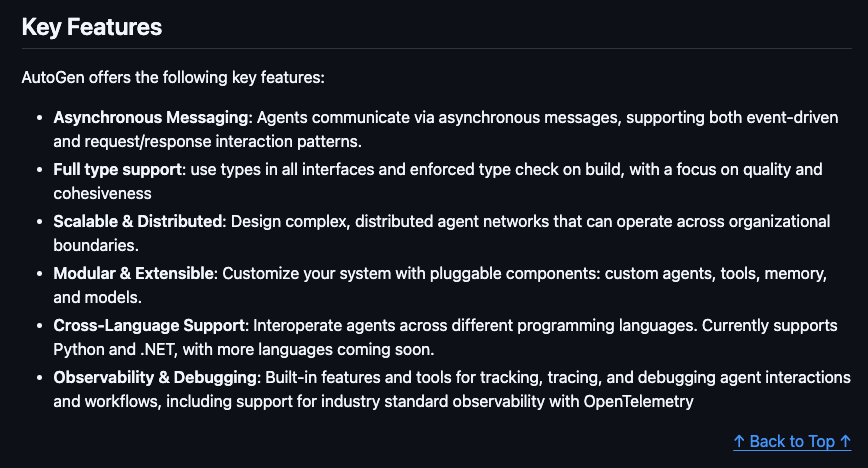
Autogen is a open source framework for building AI agents in Python and .NET.
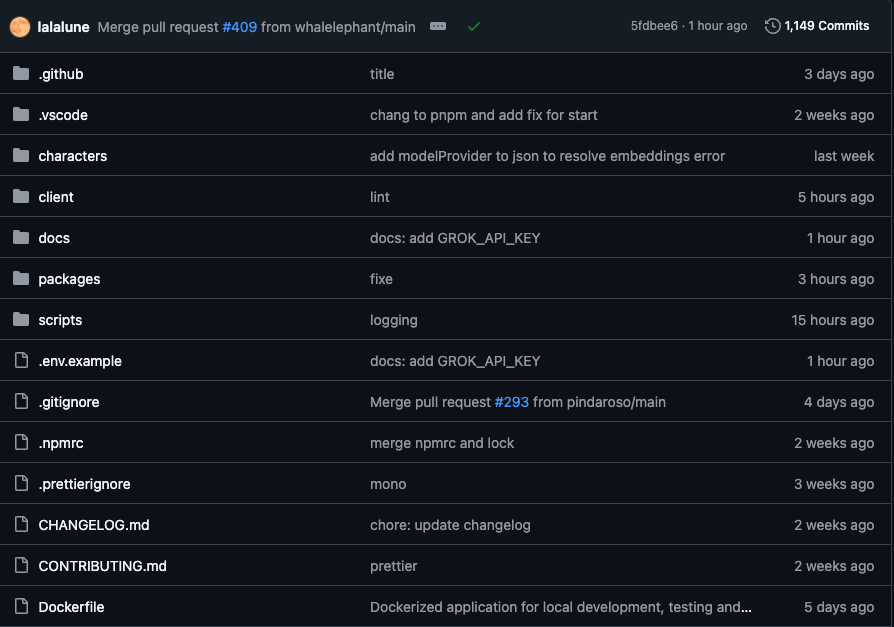
Eliza is an open source conversational AI agent for Twitter, Discord, and other platforms through integrations.
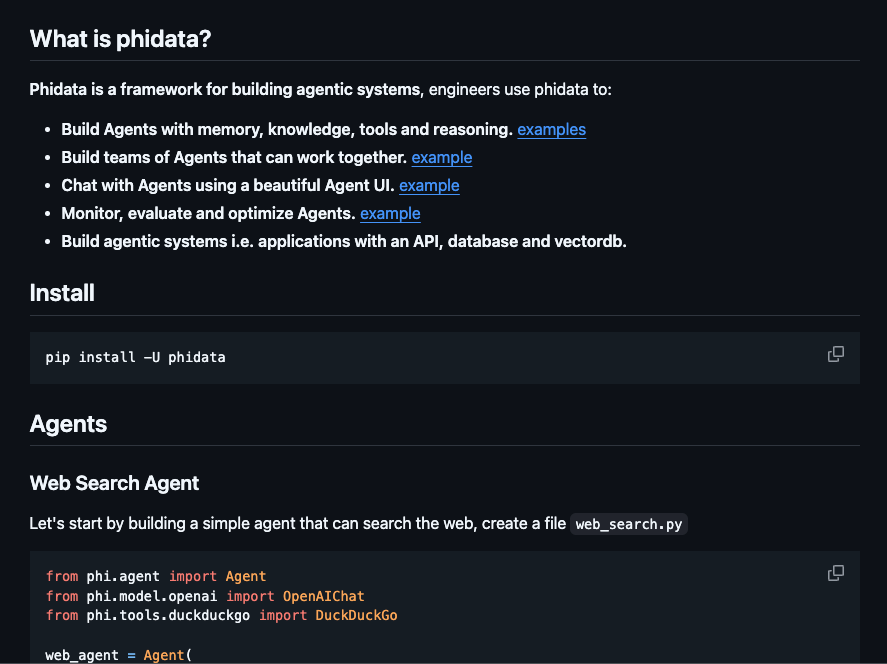
phidata is a framework and interface for building AI agents with 'memory, knowledge, tools and reasoning'.
Google's Agent Development Kit is a code-first framework for building, evaluating, and deploying sophisticated agents, especially around Gemini and agent-to-agent workflows.
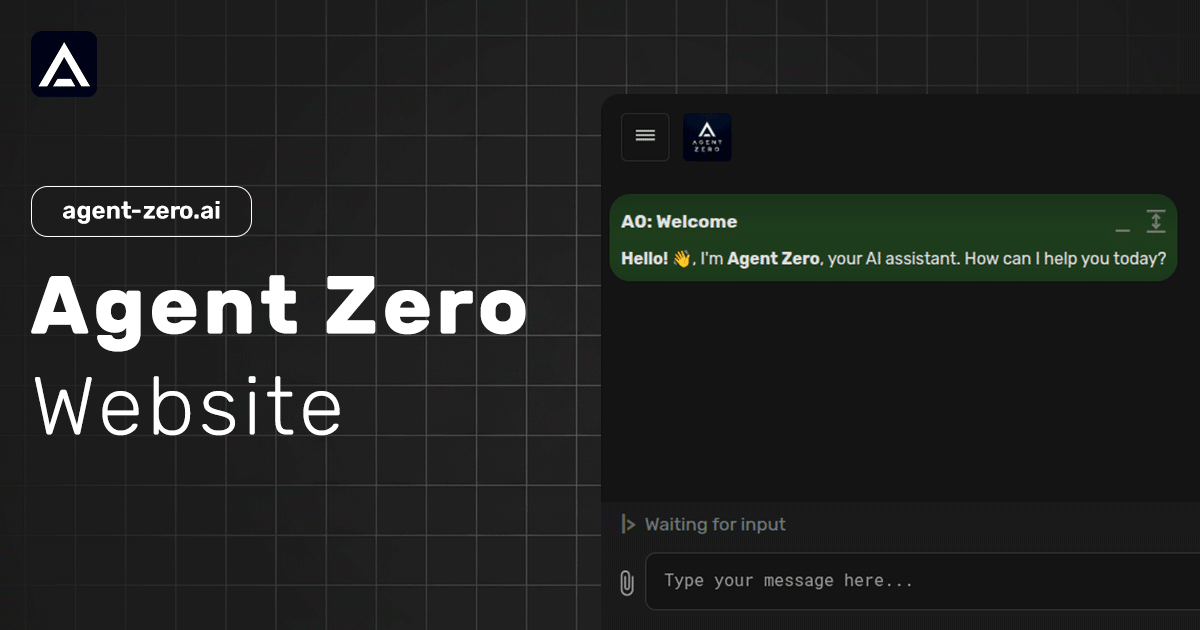
Agent Zero is a general-purpose AI agent framework that can use the terminal, browser, files, and reusable skills to complete autonomous tasks.

OpenManus is an open-source general agent framework inspired by Manus, designed for multi-step task execution, tooling, and autonomous workflows.
SWE-agent is a software engineering agent built by researchers at Princeton and Stanford for fixing GitHub issues and handling developer-oriented tasks.
smolagents is Hugging Face's lightweight library for code-first agents with minimal abstractions, tool use, and model-agnostic execution.
Letta is a platform for building stateful agents with advanced memory, self-improving behavior, and persistent long-term context.
MetaGPT is a multi-agent framework that models an AI software company with distinct roles like product manager, architect, and engineer.
CAMEL-AI is a multi-agent framework and research ecosystem focused on scalable agent collaboration, simulation, and automation.
Goose is a native open-source AI agent with desktop, CLI, and API interfaces for coding, automation, research, and workflows.
MolmoWeb is an open multimodal web agent from Ai2 that uses visual understanding to control a browser and complete online tasks.
OpAgent is a web navigation agent framework built for browser automation and multi-step online task execution.
GenericAgent is a minimal self-evolving agent framework with browser, terminal, filesystem, and device control capabilities.
AutoGPT is one of the best-known autonomous agent projects for building, deploying, and managing long-running AI agents.
Flowise is a visual builder for AI agents, workflows, and multi-agent applications with self-hosting and cloud options.
AgentScope is a developer-centric framework for building observable, production-ready, multi-agent and multimodal AI systems.
Haystack is an orchestration framework for production AI systems that now supports agent workflows, retrieval pipelines, and explicit control over state and tools.
Lindy is a no-code agent builder for business workflows that connects email, calendars, CRMs, and web actions so non-developers can deploy agents with guardrails.
Gumloop is a visual AI automation platform for building agents and workflows across SaaS tools with drag-and-drop orchestration and monitoring.
MindStudio is a visual platform to design, test, and deploy AI agents with hundreds of model and integration options for teams and enterprises.
Salesforce Agentforce is Salesforce's enterprise agent layer for CRM-grounded assistants and autonomous actions across Sales, Service, and industry clouds.
AgentGPT is a browser-based platform for configuring autonomous AI agents with goals, tool access, and iterative execution for experimentation and lightweight automation.

Manus is a general AI agent product built for multi-step task execution across web research, planning, and complex online workflows.
Langflow is an open-source visual builder for AI agents, RAG pipelines, and MCP-backed workflows with APIs for embedding flows into your own apps.
LettaBot is an Apache-licensed personal assistant from the Letta team that unifies Telegram, Slack, Discord, WhatsApp, and Signal with persistent memory and local tool execution powered by the Letta stack.
Chibi is a MIT-licensed, self-hosted Telegram bot that orchestrates multiple LLM providers, MCP tools, async jobs, and sub-agents from a single mobile-first interface.
Open WebUI is a self-hostable web interface for local and remote LLMs with pipelines, tool use, RAG, and community extensions that many teams treat as a private ChatGPT plus agent playground.
LibreChat is an open-source, self-hosted ChatGPT-style UI with plugins, agents, multimodal chat, and enterprise-friendly authentication patterns.
AnythingLLM by Mintplex Labs is a self-hosted all-in-one desktop and Docker app for RAG, agents, and multi-workspace document chat over your own data.
Khoj is an open-source personal AI copilot for your notes, docs, and second brain with self-hosting, research agents, and assistant integrations.
Roo Code is a community-driven VS Code extension fork in the Cline lineage focused on autonomous coding, deep tool use, and rapid iteration from the open agent ecosystem.

Convai is a developer platform for embodied conversational AI characters in games, XR, training, and virtual worlds. Characters can talk, perceive the scene, and act inside Unity, Unreal, and web environments.
Higher parameter counts (70B+) directly correlate with better logic and memory persistence in AI Agents.
Prioritize platforms with End-to-End Encryption or strict "No-Log" policies for sensitive creative sessions.
Our research team monitors API updates and model releases daily to ensure these technical insights remain accurate.
We treat AI agents as systems that plan, call tools, and iterate until a task completes—not single-shot chat. Typical surfaces today include IDE and terminal agents (multi-file edits, shells, CI), browser runtimes (Playwright/CDP, remote browsers, “computer use” style loops), workflow orchestrators (nodes + LLM steps + webhooks), desktop and DM gateways (files, notifications, chat channels), and frameworks you host yourself. Pure chat without durable tool use stays in chat categories.
Model Context Protocol (MCP) has become the default pattern for exposing tools, prompts, and resources to agents across Claude, VS Code–family editors, Cursor-class IDEs, and many frameworks. In practice that means fewer bespoke integrations per model vendor and more shared servers for GitHub, databases, ticketing, and internal APIs. It also means new engineering work: tool curation, least-privilege scopes, tracing, and managing context spent on tool metadata in large sessions. The public spec and ecosystem live at modelcontextprotocol.io.
Independent roundups help with pricing snapshots and category coverage; shipping details still change weekly—verify on the vendor site before procurement.
Match the product class to the risk surface: coding and browser agents need session isolation, logging, and rollback; customer-facing agents need brand-safe prompts and escalation paths. Budget for tokens plus infra (hosted browsers, queues, GPU workers), not only per-seat SaaS. Prefer stacks with evals, tracing, and replay over opaque magic. For browser-heavy work, plan hybrid automation: deterministic steps where the DOM is stable, LLM steps where it is not. For coding, insist on CI feedback in the loop and human review before merge.
The best AI chat bots and models for text and voice.
AI tools to help with programming, code generation, and software development.
Freely available AI technologies and platforms that encourage collaboration and innovation.
The study and development of new AI technologies and methodologies.
AI platforms that turn prompts into full-stack apps, prototypes, internal tools, and deployable products.
View this category list →Found a useful AI tool? Save this directory or share it with your network to help others discover the future of AI.